
Exploring the Wilder Cape
DAY 1 CAPE TOWN
On arrival at Cape Town International Airport, you proceed through passport control and collect your luggage. In the arrivals Hall you will be met by a company representative who will assist you to collect your hired car and take you through your itinerary and hand you over your information travel pack. Now you proceed to your Hotel in the luxurious suburb of Fresnaye or alternatively to your Hotel in the trendy suburb of Sea Point.
Overnight: The Clarendon, Fresnaye on Bed & Breakfast basis
Overnight: The President Hotel, Sea Point on a Bed and Breakfast basis
DAY 2 & 3 CAPE TOWN
Explore the city of Cape Town with the Cape Peninsula, Cape Point, Kirstenbosch Botanical Gardens, Robben Island, Table
Mountain to mention a few sights to visit.
CAPE TOWN: In which ever way, the area of Cape Town in South Africa is one of the most beautiful and interesting to visit in the world…. Here, other than a fascinating city, with many historical points, museums, markets, restaurants along the sea, one can enjoy views of majestic mountains, rocky coastlines, golden beaches, magnificent gardens, excellent wines, and superior hotels, Cape Town is known for its very friendly people.
The mountains surrounding the city have the most spectacular view points onto the coast and ocean below. Visit Cape Point, Kirstenbosch Botanical gardens, or Monkey World or Bird World in Hout Bay, or even visit the Butterfly farm on the wine route.
As the Legislative Capital of South Africa, with over 2 million inhabitants, Cape Town is definitely the most vibrant city in South Africa. There are so many places to visit, such as the Castle of Good Hope, originally built between 1666 and 1679, and being the oldest building in South Africa, the Houses of Parliment, the Market Square, or the Company gardens, set out as the original gardens in 1652, The South African Planetarium (found at the top of Company Gardens) and the South African Museum hosts an incredible quantity of fossils as well as a gallery dedicated to whales, with a skeleton of over 20 meters of one of these majestic sea creatures.
Overnight: The Clarendon, Fresnaye on Bed & Breakfast basis
Overnight: The President Hotel, Sea Point on a Bed and Breakfast basis
Day 4 CAPE TOWN/PATERNOSTER
After breakfast you head north west to reach the stunning West Coast area and the beautiful little fishing village of Paternoster. The Cape West Coast stretches from Cape Town as far as the border with the Northern Cape at Touws River, including within its parameters the indescribably beautiful Cederberg Mountains, famous for centuries-old rock art. All along this stretch of coastline is a series of quaint historic towns and fishing villages with names like Lambert’s Bay, Paternoster, Saldanha and Langebaanthat today roll with ease off the tongue, but until fairly recently were left to languor in relative obscurity.
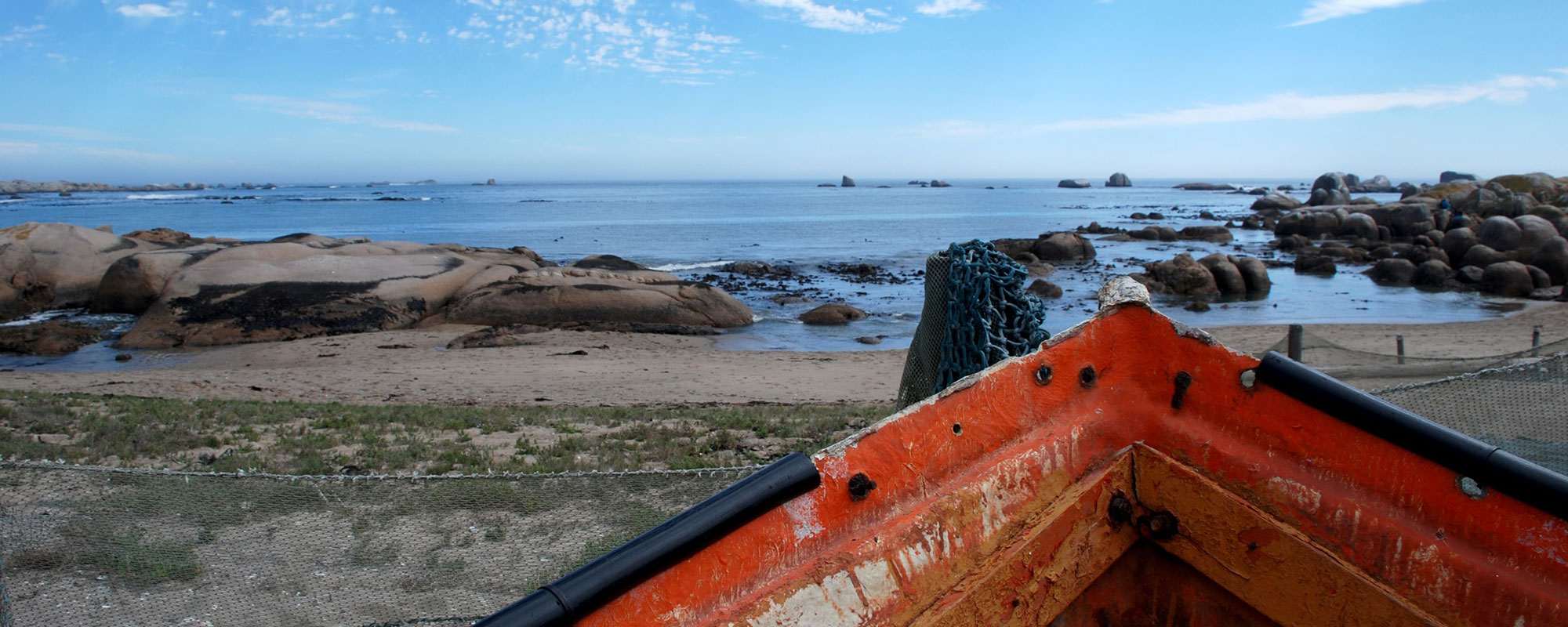
Paternoster, meaning “Our Father” derives its name from the prayers of ship-wrecked Portuguese sailors. Paternoster is a small, quaint and picturesque fishing village about 145km (90 minutes drive) from Cape Town, also one of the oldest towns along the West Coast famous for its abundance of crayfish. Paternoster is an all year round destination famous for its traditional fisherman’s architecture and endless pristine sandy white beaches. Visitors to Paternoster delight in watching whales and dolphins frolicking in the ocean (ten months of the year) and after the first spring rains fall the landscape is transformed by the millions of indigenous flowers which open and densely carpet the earth in bright bursts of colour (usually between late July and September).
For bird lovers, Paternoster is home to over 250 species of birds with seabirds (Seagulls, cormorants, sacred ibis and the Oystercatcher) using this coastline as their breeding ground.
Visit the nearby West Coast Fossil Park and the Cape Columbine lighthouse (the last manned lighthouse built in in 1936).
Overnight: Strandloper Ocean Boutique Hotel on a Bed and Breakfast basis
Overnight: Paternoster Dunes on a Bed & Breakfast basis
Day 5 PATERNOSTER/ KAGGA KAMMA
Early breakfast as today will be a long day as you head east and travel to the Cedarberg Region and the unique Kagga Kamma Lodge. The unique accommodation options add to the sense of adventure. Accommodation is in ‘Cave’ Suite, beautifully integrated with the sandstone rock formations; or spacious Hut Suite, resembling the traditional dwellings inhabited by the clans of the area many years ago.
The Cederberg mountains and nature reserve are located near Clanwilliam, approximately 300 km north of Cape Town. The Mountain range is named after the endangered Clanwilliam cedar (Widdringtonia cedarbergensis), which is a tree endemic to the area. The mountains are noted for dramatic rock formations and San rock art.
The Cederberg mountains extend about 50 km north-south by 20 km east-west. They are bordered on the west by the Sandveld, the north by the Pakhuis Mountains, the east by the Springbok Flats and the south by the Kouebokkeveld Mountains and the Skurweberge. The main access road, the N7, runs to the west of the range. The nearest towns are Citrusdal to the southwest and Clanwilliam to the north. The area is sparsely populated.
Overnight: Kagga Kamma on a Fullboard basis with the activities as offered by the Lodge included.
Day 6 KAGGA KAMMA
The day will be spent on the various activities as included by Kagga Kamma Lodge.
Kagga Kamma Nature Reserve is nestled in the wilderness of the Swartruggens area, in the peaceful Southern Cederberg Mountains, in the Western Cape. The Reserve is renowned for its scenic beauty and dramatic rock formations typical of the Cederberg region.
With a rich and fascinating Cultural Heritage, this area offers spectacular scenery, ancient Rock Art sites, amazing indigenous fauna and flora, phenomenal night skies and small critters that are scarcely seen in other parts of the country. The San and Khoi people lived at Kagga Kamma many years ago and today guests can see traces of their existence in the unique Rock Art that dates back 1200-6000 years.
Overnight: Kagga Kamma on a Fullboard basis with the activities as offered by the Lodge included.
Day 7 KAGGA KAMMA/SPRINGBOK
his morning you leave the Cedarberg to travel through the inland in a northerly direction to reah the area known as the Namaqualand. It is a long but scenic drive from Kagga Kamma to Springbok. Arrival in Springbok will be in the afternoon.
The Namaqualand’s landscape ranges from an unexploited coastal strip in the west to semidesert areas in the north-east. Famed for its proximity to the Atlantic Ocean, its wild flowers during spring, its wealth of minerals and cultural history, Namaqualand is a popular region for international and local tourists.
The beginning of the flower season varies from year to year but it usually occurs between August and October. The natural landscape is continually monitored with the first sign of spring and flower season being the arrival of Namakwa daisies. When purple vygies bloom, spring is coming to an end.
Look out for the Namaqualand Sandgrouse which has an amazing ability – it can store water in its breast feathers and fly as far as 40 km to quench the thirst of its nestlings. Twitchers will be kept busy with spotting all 94 recorded bird species. Home to 45 mammalian species, you will have a chance of spotting gemsbok, springbok, Hartman’s Zebra, bat eared foxes and aardwolf amongst the incredible number of floral species.
Overnight: Daisy Lodge on a Bed and Breakfast basis
Day 8 & 9 SPRINGBOK / AUGRABIES FALLS
This morning you have time to eplore the region as you make your way towards the Augrabies Falls National Park, located around Augrabies Falls, about 120km west of Upington in the Northern Cape province of South Africa. It was founded in 1966 and covers an area of 820 km². It stretches along the Orange River, or also known today by a local name, the Gariep River.
The waterfall is about 60 meters high and is majestic when the river is full. The gorge below the falls averages 240m deep and runs for 18km. It offers an impressive example of granite erosion.
The original Khoikhoi people called the Ankoerebis waterfall, which means “place of great noises”.
The Trekboers (first whites in the area) who later settled in the area derived the name Augrabies. There are many alluvial diamond deposits along the Orange River and legend has it that the largest diamond deposit in the world is in the turbulent well, eroded into the granite at the foot of the waterfall.
The park’s most distinctive plant is the giant aloe (Aloidendron dichotomum) known locally as the quiver tree or Kokerboom. It adapts perfectly to the dry semi-desert rocky areas of the Nama-Karoo, capable of withstanding extreme temperatures and barren soil. This tree, which grows up to five meters high, gets its name from the fact that the Bushmen (San) used the soft branches to make quivers for their arrows. The quiver’s eye-catching silhouette is typical of this part of the Northern Cape landscape. When the tree blooms in winter, flocks of birds are attracted to their copious nectar, and baboons can be seen cutting up the flowers to make sweet liquor.
A major landmark in the park is Moon Rock, a large exfoliation dome measuring approximately 700 meters (330 feet) by 100 meters (330 feet) and 30 meters (98 feet) in height.
Overnight: Dundi Lodge on a Bed and Breakfast basis
Overnight: The Falls Guesthouse on a Bed and Breakfast basis
Day 10 Augrabies Falls/Kgalagadi
Early breakfast and you head towards Upington and then north to reach the Kgalagadi Transfrontier Park. The Kgalagadi Transfrontier park is located in the great sandy depression west of the southern African subcontinent known as Kalahari. It covers almost a third of the area and forms what could be the largest sand area in the worldas it stretches from the Republic of the Congo to Angola and Zimbabwe. The term Kalahari derives from the word Kgalagadi for “the land that dried up”, “the dry land” or “the land of the desert”.
One of the last truly untouched ecosystems in the world, the park is the result of the unification of South Africa’s Kalahari Gemsbok Park and Botswana’s Gemsbok National Park. At 38,000 km2, it is one of the largest conservation areas in the world. The two dry rivers in the area, the Nossob and the Auob, cross areas of red sand, with few acacias, and the Shepherd’s tree, and scattered grass. The park offers shelter to the herds of endemic antelopes that have roamed the semi-desert savannah for thousands of years, including: gemsbok (oryx), springbok, blue wildebeest, red hartebeest and eleland. Then there are the famous black maned lions, the leopard, the cheetah and among the smaller ones, the mongoose, porcupine and the honey badger. 58 mammals, 55 reptiles, insects and a myriad of plant species share the desert and dry out while around 300 bird species, including at least 20 species of large raptors, share the endless blue sky.
Overnight: !Xaus Lodge on a Fullboard basis with the activities as offered by the Lodge included.
Day 11 Kgalagadi/!Xaus Lodge
The day will be spent enjoying the activities offered at !Xaus Lodge. Pronounced ‘kaus’, the lodge is a place to experience a unique desert environment, providing accommodation in the Kgalagadi Transfrontier Park for eco-tourists and visitors to this wilderness area in the Kalahari. A unique living space, highlights of the lodge include a cosy lounge with a fireplace, an art and craft shop, a large observation deck perfect for stargazing, a refreshing swimming pool and a heart- warming fire in the boma, perfect for enjoying the beauty of the silence of the night while keeping warm.
Overnight: !Xaus Lodge on a Fullboard basis with the activities as offered by the Lodge included.
Day 12 Kgalagadi/Upington
After breakfast you will be transferred by the lodge vehicles back to the pick-up point and you proceed to exit at Twee Rivieren doing a gamedrive to the exit. You then continue on to Upington. Arrival in the afternoon and time to relax and enjoy some time along the banks of the Orange River.
Overnight: River Place Manor, Upington on a Bed and Breakfast basis
Day 13 Upington/Departure
After a leisurely breakfast you head off to the Upington Airport for your flight out.